_edited.png)

How to Measure Body Composition and Track Change

The scale says you are down five pounds, but your clothes fit the same. Or your weight has not moved in two weeks, yet your waistline looks different in progress photos. These moments are why learning how to measure body composition can give you a clearer view of your transformation than body weight alone.
Body composition separates what makes up your weight: fat mass, lean mass, bone, and body water. It helps you see whether a nutrition plan, strength routine, GLP-1 medication, or medical weight-management program is moving you toward the changes you actually want. The goal is not to chase a perfect body-fat percentage. It is to create a consistent, useful picture of your progress.
What body composition measures
Your total body weight is a single number. Body composition adds context by estimating how much of that number comes from body fat and how much comes from fat-free mass. Lean mass includes muscle, organs, water, and other non-fat tissues. Many consumer tools cannot isolate muscle with clinical precision, so treat “muscle mass” readings as estimates and watch the trend instead of focusing on one result.
For someone losing weight, this distinction matters. A lower number on the scale can reflect fat loss, water loss, muscle loss, or a combination. Preserving lean mass while reducing body fat is often a productive goal because muscle supports physical function, strength, and long-term metabolic health.
Body composition also explains why the scale can fluctuate without signaling a setback. Sodium intake, menstrual cycles, hard workouts, carbohydrate intake, hydration, constipation, and certain medications can all shift body water. Those shifts can change your scale weight and some body-composition readings from one day to the next.
How to measure body composition: your main options
There is no single best method for every person. The right choice depends on your budget, access, comfort level, and whether you need a clinical measurement or a practical way to track change over time.
DEXA scans
Dual-energy X-ray absorptiometry, often called DEXA, is one of the more detailed ways to assess body composition. A scan can estimate body-fat percentage, lean mass, bone mineral density, and the distribution of fat across different areas of the body. Some reports also estimate visceral fat, the fat stored around internal organs.
DEXA is useful if you want a comprehensive starting point or periodic check-in, especially when you are focused on preserving lean mass during significant weight loss. The trade-off is cost and availability. Results can also vary slightly based on the machine, software, hydration, and testing conditions, so compare scans from the same facility when possible.
Bioelectrical impedance analysis
Bioelectrical impedance analysis, or BIA, is found in many smart scales, handheld devices, and fitness or medical offices. It sends a very small electrical current through the body and uses resistance to estimate body water, fat mass, and lean mass.
It is convenient, private, and usually more affordable than a scan. But BIA is highly sensitive to hydration and routine. A reading after a salty dinner, strenuous workout, long flight, or alcohol intake may look quite different from your usual baseline. It is best used as a trend tool, not as a final verdict on your body-fat percentage.
Skinfold calipers
Skinfold testing estimates body fat by measuring the thickness of skin and fat at selected sites, such as the abdomen, thigh, or triceps. When performed by an experienced professional using a consistent protocol, calipers can be a practical and relatively low-cost tracking method.
The limitation is technique. Results depend heavily on the person taking the measurements, the sites used, and their ability to consistently locate and pinch the tissue. If you choose calipers, work with the same qualified professional for repeat measurements.
Circumference measurements and waist size
A tape measure cannot calculate body-fat percentage, but it can reveal meaningful body changes. Waist circumference is particularly useful because excess abdominal fat is associated with higher cardiometabolic risk. Measuring your waist, hips, chest, upper arms, and thighs can also show where your body is changing when the scale is slow to respond.
For a waist measurement, use a flexible tape measure on bare skin, breathe out normally, and measure around your abdomen just above the hip bones. Keep the tape level and snug without pulling it tight. The key is repeating the same method every time.
Progress photos and 3D visualization
Photos do not measure body fat directly, yet they capture changes that numbers may miss: posture, waist definition, facial changes, muscle shape, and how clothing fits. Take front, side, and back photos in similar lighting, clothing, pose, and distance every four weeks.
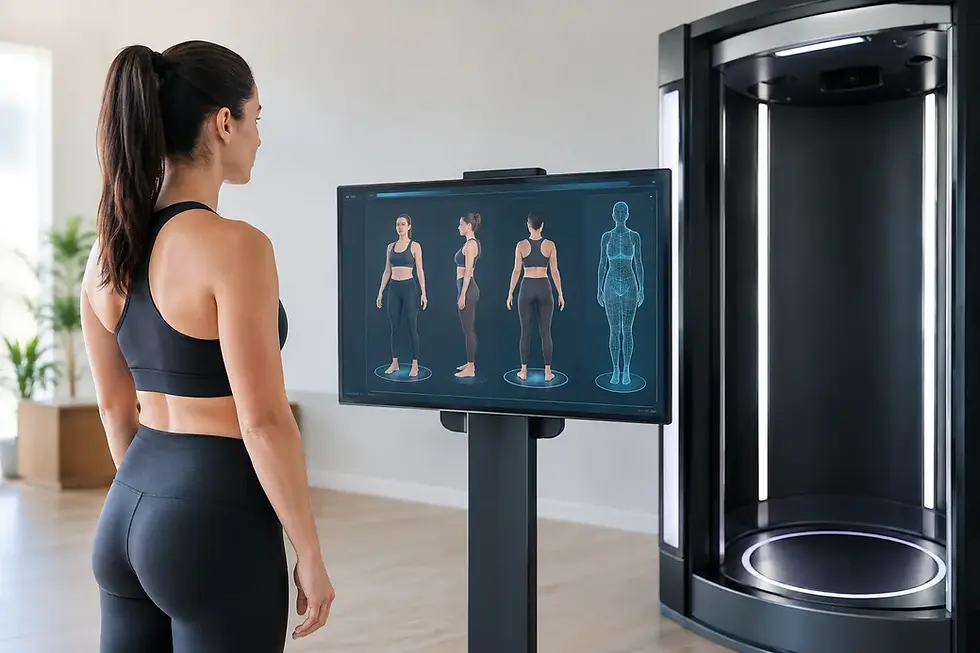
3D body visualization can add another layer by making potential and observed shape changes easier to see. At MyBodySimulator.com, the focus is on helping people visualize potential transformation outcomes and create a more tangible plan. Visualization is not a replacement for medical assessment, but it can build momentum when paired with objective measurements.
Choose a method you can repeat consistently
The most valuable body-composition measurement is rarely the fanciest one. It is the one you can repeat under similar conditions and understand over time. For many people, a smart scale, waist measurement, and monthly photos create a practical baseline. If you want more detail, add periodic DEXA scans or professional BIA testing.
Try to avoid comparing readings from different devices as if they were interchangeable. One smart scale may estimate 31% body fat while another estimates 27%, even on the same day. That does not mean one device is necessarily wrong. Each uses its own equation and assumptions. Pick one device, then watch whether its estimates are moving in a direction that matches your other progress signals.
Create a body-composition tracking routine
Consistency reduces noise. If you use a BIA scale, measure at the same time of day, ideally in the morning after using the bathroom and before food, coffee, or exercise. Wear similar clothing or no clothing, and place the scale on a hard, level surface.
You do not need to react to every daily reading. Weighing daily can work well for people who focus on weekly averages, but it can feel discouraging for others. A weekly check-in is enough for many people. Take circumference measurements every two to four weeks, and take photos about once a month. DEXA scans are generally more useful every few months than every few days.
Record more than body-fat percentage. Track your weight trend, waist size, strength performance, energy, sleep, hunger, medication changes, and how your clothes fit. These details help you and your healthcare professional interpret the bigger picture.
What changes to expect during weight loss
Weight loss is not a perfectly straight line, and neither is body recomposition. People starting a GLP-1 medication may see an early shift in scale weight from lower appetite, reduced food intake, and changes in water balance. Over time, the goal is usually to support fat loss while protecting as much lean mass as possible.
Protein intake, resistance training, adequate sleep, and a realistic calorie plan can all support that goal. Your individual needs depend on age, health conditions, activity level, current weight, and treatment plan. If you are using a GLP-1 medication or have a history of kidney disease, diabetes, disordered eating, or significant unintentional weight loss, discuss nutrition and exercise changes with a qualified clinician.
Do not panic if body-fat readings briefly rise while your weight is stable. Hydration changes can distort BIA estimates. Instead, look at four to eight weeks of data alongside waist measurements, photos, and how you feel. Meaningful progress is often visible in the pattern before it is obvious in a single number.
Use the data to make confident decisions
Body composition is useful when it guides action. If your waist is shrinking, strength is improving, and your weight trend is gradually declining, your plan may be working even if a smart scale is inconsistent. If weight is dropping quickly but you feel weak, your strength is declining, or lean-mass estimates are falling over several check-ins, it may be time to review your protein intake, training routine, and treatment plan with a healthcare professional.
The best measurement plan gives you visibility without turning your life into a spreadsheet. Use the scale for trend data, measurements for shape changes, photos for visible proof, and professional testing when you need deeper insight. That combination can help you see your potential transformation more clearly and make decisions based on progress, not guesswork.
Interested in taking the next step? eMI offers a doctor-led GLP-1 weight loss program designed to help eligible patients achieve their goals with personalized care and ongoing support. Learn more and see whether the program may be right for you.


Comments