
Calorie Tracking Versus Intuitive Eating for Weight Loss

A food log can make a day feel measurable: breakfast is entered, portions are visible, and you know where you stand before dinner. But for some people, tracking every bite becomes exhausting. That is the real question behind calorie tracking versus intuitive eating: which approach gives you enough structure to make progress without making food consume too much mental space?
The best answer is rarely one-size-fits-all. Your starting point, health history, relationship with food, schedule, and weight-loss goals all matter. The most effective plan is the one that helps you understand your choices, respond to real-life changes, and build habits you can continue after the initial motivation fades.
What calorie tracking actually does
Calorie tracking means recording the foods and drinks you consume, usually in an app, to estimate daily energy intake. Many people also track protein, fiber, carbohydrates, fat, water, or exercise. Its biggest advantage is visibility. You can see patterns that are easy to miss, such as a large restaurant meal, calorie-dense coffee drinks, frequent grazing, or a protein intake that is lower than expected.
For weight loss, a calorie deficit is typically required over time: your body uses more energy than it takes in. Tracking does not create that deficit by itself, but it can make the inputs easier to measure and adjust. If progress stalls for several weeks, a detailed log gives you and your healthcare professional more information to work with than memory alone.
This can be especially useful when you are beginning a structured plan, returning to weight management after a long break, or trying to understand how a GLP-1 medication affects your appetite. GLP-1 medications may help some eligible patients feel fuller with less food, but they do not automatically guarantee adequate nutrition. Tracking protein, fiber, fluids, and overall intake for a period of time can help protect against under-eating or losing muscle along with body fat.
Where tracking can fall short
Food databases are estimates, package labels have allowable variation, and restaurant portions are difficult to measure. A logged number should be treated as useful data, not a verdict on whether you were “good” or “bad” that day.
Tracking can also become too rigid. Some people feel anxious when they cannot measure a meal precisely, skip social events to stay within a target, or focus so intensely on calories that hunger, fullness, satisfaction, and nutrition quality disappear from the picture. People with a current or past eating disorder, or anyone who notices increased food anxiety from logging, should discuss alternatives with a qualified healthcare professional or registered dietitian.
How intuitive eating approaches food
Intuitive eating is a framework for rebuilding trust with internal cues such as hunger, fullness, satisfaction, and energy needs. It encourages people to move away from chronic dieting rules and toward a more flexible relationship with food. Rather than asking, “How many calories can I fit in?” intuitive eating asks questions like, “Am I hungry?” “What would feel satisfying?” and “How does this meal affect my energy and fullness later?”
That flexibility can be powerful. When foods are not labeled forbidden, they may lose some of their urgency. Many people find they are better able to enjoy a meal out, navigate holidays, and recover from an unplanned choice without the all-or-nothing thinking that can derail a diet.
Intuitive eating is not the same as eating without awareness. It includes practical skills: planning regular meals, noticing how long foods keep you full, choosing foods that support health, and honoring preferences. For someone who has spent years ignoring hunger to follow strict plans, these skills can be a meaningful part of long-term wellness.
Why intuitive eating may not produce quick answers
Internal signals can be difficult to read at first. Stress, poor sleep, emotional eating, medication changes, highly processed foods, and years of dieting can all affect appetite cues. If your primary short-term goal is a specific amount of weight loss for health reasons, intuitive eating alone may not provide the concrete feedback you need to know whether your plan is working.
It is also worth separating the goal of intuitive eating from the goal of intentional weight loss. Intuitive eating can support a healthier relationship with food and may support weight stability over time, but it is not designed as a calorie-deficit method. Some people lose weight, some maintain, and some gain weight as they move away from restriction. That does not make the approach ineffective - it means the outcome depends on the person and the goal.
Calorie tracking versus intuitive eating: key trade-offs
Calorie tracking offers external data. Intuitive eating develops internal awareness. One is not automatically more disciplined, healthy, or sustainable than the other.
Tracking may fit best if you like numbers, want to identify patterns quickly, have a defined nutrition target, or feel motivated by measurable progress. It can bring structure to a weight-loss plan, particularly when paired with consistent weigh-ins, body measurements, strength training, and protein goals. The data can help you make confident decisions instead of reacting to one high-calorie meal or one fluctuating number on the scale.
Intuitive eating may fit best if tracking has become emotionally draining, you tend to swing between strict dieting and overeating, or you want to practice flexibility around food. It can be a strong long-term skill set once you have a reliable understanding of balanced portions and your personal hunger patterns.
The potential downside of both methods is misusing them. Tracking can turn into perfectionism. Intuitive eating can be misunderstood as ignoring nutrition, planning, or medical needs. Neither approach replaces individualized care when you have diabetes, digestive conditions, significant weight changes, or a history of disordered eating.
A hybrid approach often works better
For many adults, the most sustainable path is not choosing a permanent side. It is using tracking as a learning phase and intuitive eating as a maintenance skill.
For example, you might track meals for two to four weeks to learn what 25 to 35 grams of protein looks like at a meal, how much fiber you typically get, and which lunches prevent late-afternoon hunger. Then, instead of recording forever, you can use those observations to build repeatable meals and check in periodically when your routine changes.
Another option is selective tracking. You may log only protein and fiber, track weekdays but not weekends, or use photos and brief hunger notes instead of calorie totals. This creates useful structure while lowering the burden. The right level of detail is the one that helps you take action without making your eating habits feel like a full-time project.
If you are using a GLP-1 medication, a hybrid method can be particularly practical. Reduced appetite can make it easier to eat less, but it can also make regular nutrition feel less automatic. A simple plan centered on protein, produce, hydration, resistance training, and periodic progress review can support healthier body composition while you work toward your goal.
Measure progress beyond the food log
The scale is one data point, not the entire transformation. Weight can shift from water, sodium, digestion, menstrual cycles, and changes in training. Body composition, waist measurements, strength, energy, sleep, and how your clothes fit can reveal progress that a daily weigh-in misses.
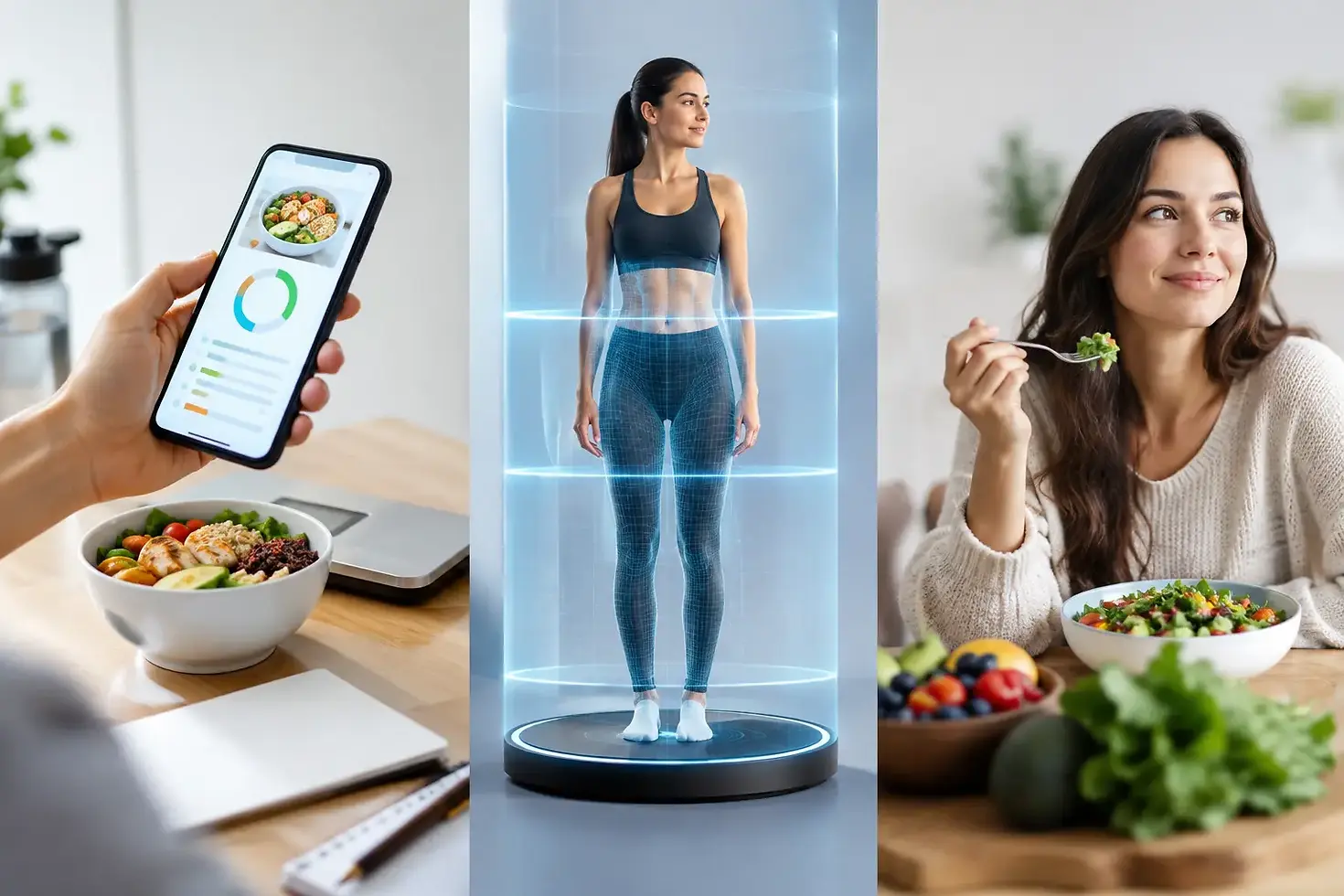
Visualization can also help make long-term goals feel more concrete. Seeing your potential transformation can create motivation, but realistic expectations matter. A body simulation is best used as a planning tool - a way to understand possible changes, set milestones, and stay focused on consistent actions rather than chasing a perfect image.
Choose the approach that gives you clarity and momentum. You do not need to track every calorie forever, and you do not need to rely on hunger cues before you are ready. Start with a method you can repeat this week, learn from the results, and adjust with support when needed.
Interested in taking the next step? eMI offers a doctor-led GLP-1 weight loss program designed to help eligible patients achieve their goals with personalized care and ongoing support. Learn more and see if the program may be right for you at www.emi-aesthetics.com/glp-1.


Comments