_edited.png)

Best Body Visualization Software Features to Compare

A number on a scale can tell you that your weight changed. It cannot always show you why your clothes fit differently, where changes may become noticeable, or what a realistic next milestone could look like. The best body visualization software turns an abstract goal into something you can see, helping you plan with more clarity, motivation, and realistic expectations.
For someone considering a structured fitness plan, nutrition changes, or a doctor-led GLP-1 program, that visibility can be meaningful. A visual tool does not replace medical guidance or guarantee a specific outcome. It can, however, help you ask better questions, set goals that feel personal, and recognize progress that might not show up in a single weekly weigh-in.
What Body Visualization Software Actually Does
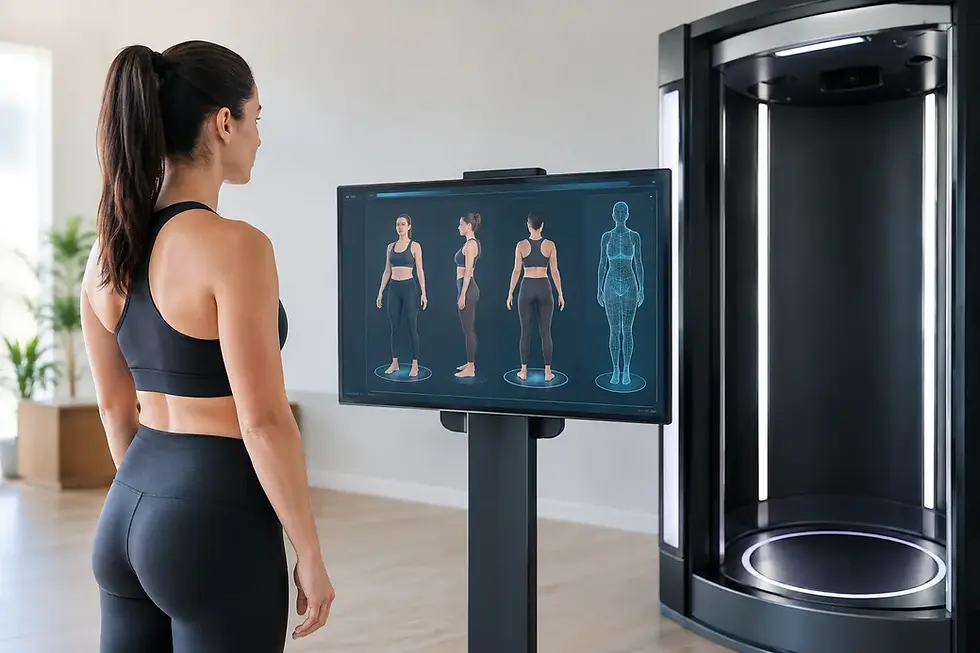
Body visualization software uses information such as height, weight, body shape, measurements, and progress photos to create a visual representation of your body or a potential future change. Some tools use two-dimensional image adjustments, while others use 3D body models, AI-assisted simulations, or measurement-based avatars.
The experience can vary widely. A simple app may show a generalized before-and-after effect based on a target weight. A more advanced platform may let you explore how different weight ranges could affect your silhouette, compare progress checkpoints, or view body composition trends alongside visual changes.
The goal is not to produce a promise. Human bodies lose fat, retain muscle, and change shape differently based on genetics, age, hormones, starting body composition, activity, nutrition, sleep, and medical treatment. Good software makes room for that uncertainty instead of presenting one edited image as a clinical prediction.
Best Body Visualization Software: Features That Matter
When comparing the best body visualization software, look beyond how dramatic the image appears. The most useful tools support informed decisions and long-term momentum, rather than pushing an unrealistic transformation timeline.
Realistic, adjustable simulations
A useful simulator lets you enter personal inputs and adjust your goal gradually. It should show potential change as an estimate, not imply that losing a certain number of pounds will create the exact same result for every user.
Look for options that let you explore more than one target. Seeing a potential change at 10, 20, or 30 pounds may feel more practical than fixating on a final number that is months away. Smaller visual milestones can make a larger health goal feel more achievable.
A clear distinction between weight and body composition
Scale weight is only one metric. Two people at the same weight can look different because of muscle mass, bone structure, fat distribution, posture, and frame size. Software that acknowledges body composition provides a more helpful perspective than a tool focused only on pounds lost.
This matters especially if you are strength training or working to preserve muscle while losing weight. Your body may become smaller or firmer even when the scale slows down. Pair visual tracking with measurements, fit of clothing, energy level, strength, and guidance from your healthcare professional.
Progress tracking that shows the full picture
A future simulation is motivating, but ongoing tracking is where visualization becomes practical. The strongest platforms make it easy to revisit your starting point, document changes over time, and compare milestones without relying on memory.
Consistency matters more than perfect photos. If you use progress images, take them under similar lighting, from similar angles, and in similar clothing when possible. Monthly comparisons are often more informative than daily checking, which can amplify normal shifts from hydration, digestion, and hormonal changes.
Privacy controls you can understand
Body images and health-related details are personal. Before uploading photos or measurements, check whether the platform explains how data is stored, whether images are shared, and whether you can delete your information. Clear privacy choices are not a bonus feature. They are essential.
Be cautious with tools that ask for more information than they need or make vague claims about data use. You should feel in control of your images, your measurements, and who can access them.
A simple experience that keeps you engaged
The most advanced technology is not helpful if it is difficult to use. A good body visualization tool should make the next action obvious: enter your current details, choose a realistic range, view your potential transformation, and return to track progress.
That simplicity can be powerful during a weight loss journey. When motivation dips, a clear visual reminder of your direction can help you reconnect with the habits that move you forward.
2D Photos, 3D Models, and AI Simulations
There is no single format that is best for everyone. The right choice depends on what you want to learn from the tool.
A 2D photo-based simulator may be familiar and quick. It can help you visualize a broad change in your own image, but results can be influenced by lighting, camera angle, clothing, and the software's editing approach. It is often best used as a motivational reference rather than a precise forecast.
A 3D body model can offer a fuller view of proportion and shape. This format may make it easier to visualize changes from multiple angles and consider how a target range could affect your overall silhouette. Its limitation is that an avatar is still a model, not a scan of your future body.
AI body simulation can create a more personalized experience by interpreting the information you provide and generating estimated visual changes. This technology can be especially useful for exploring possibilities before you commit to a plan. Still, AI works from patterns and inputs. It cannot know exactly where your body will lose fat first or how your response to treatment will unfold.
MyBodySimulator.com is designed around this more useful middle ground: giving you a way to see your potential transformation while keeping the focus on informed planning, progress, and realistic expectations.
How Visualization Can Support a GLP-1 Weight Loss Plan
For eligible patients, GLP-1 medications may be part of a medical weight-management plan. These medications can support appetite regulation and weight loss, but they are not a substitute for individualized medical care, adequate nutrition, physical activity, and follow-up with a qualified clinician.
Visualization software can help before and during that process. Before treatment, it may help you move from a vague goal like “I want to feel better” to a more concrete conversation about timelines, milestones, and the changes you hope to experience. During treatment, it can provide a broader view of progress when weight loss is not linear.
Use the simulation as a conversation starter, not a treatment calculator. A healthcare professional can help you understand whether medication may be appropriate, what results may be realistic for your health profile, and how to protect muscle mass and overall wellness as your weight changes.
Questions to Ask Before You Choose
Before committing to a platform, consider whether it is built for your real goal. Are you trying to visualize a future target, track changes you have already made, understand body composition, or prepare for a conversation about medical weight management? One tool may do all of these reasonably well, while another may excel at only one.
Also ask whether the software explains its limitations. Trustworthy tools avoid language that guarantees outcomes, diagnoses health conditions, or suggests a simulated image is medically exact. You want technology that gives you more visibility and confidence, not pressure to chase someone else's shape or timeline.
The most valuable result is not a perfect digital image. It is the moment a long-term goal becomes clear enough to act on. When you can see your possible direction, track the steps you are taking, and adjust with support, progress becomes easier to recognize and celebrate.
Interested in taking the next step? eMI offers a doctor-led GLP-1 weight loss program designed to help eligible patients achieve their goals with personalized care and ongoing support. Learn more and see if the program may be right for you through eMI Aesthetics.


Comments